
Whole-Envelope Repairs That Address Connected Failures
Exterior services in Smithfield for homes where trim, flashing, and siding problems are linked and need to be evaluated together
Homes in Smithfield and Logan with exteriors built decades ago often show multiple connected failures at the building envelope—rotted trim pulling away from the wall, stained siding below a failed soffit joint, or flashing that has separated at the corner—because the components were installed as a system and tend to fail in sequence once water finds an entry point. Siding Master handles exterior work across Cache Valley, walking the entire envelope during the site visit to identify where the failures connect and tracing each problem to its source before any repair is started. Thirty years of combined experience in exterior trades allows the crew to see how one failure leads to the next and to plan repairs in the order that stops the damage rather than just covering the symptoms.
The work starts with a full exterior walk to document the visible damage and the underlying failures, followed by a written estimate delivered within the same week that explains what failed, what caused it, and what sequence of repairs will address the source before finishing the surfaces. The crew fixes the root cause first—repairing flashing, replacing rotted trim backing, or sealing joints—then completes the visible siding, trim, and soffit work so the envelope sheds water correctly once the job is finished.
Request a full exterior evaluation to identify connected failures and see how the repairs will be sequenced to address the underlying causes.
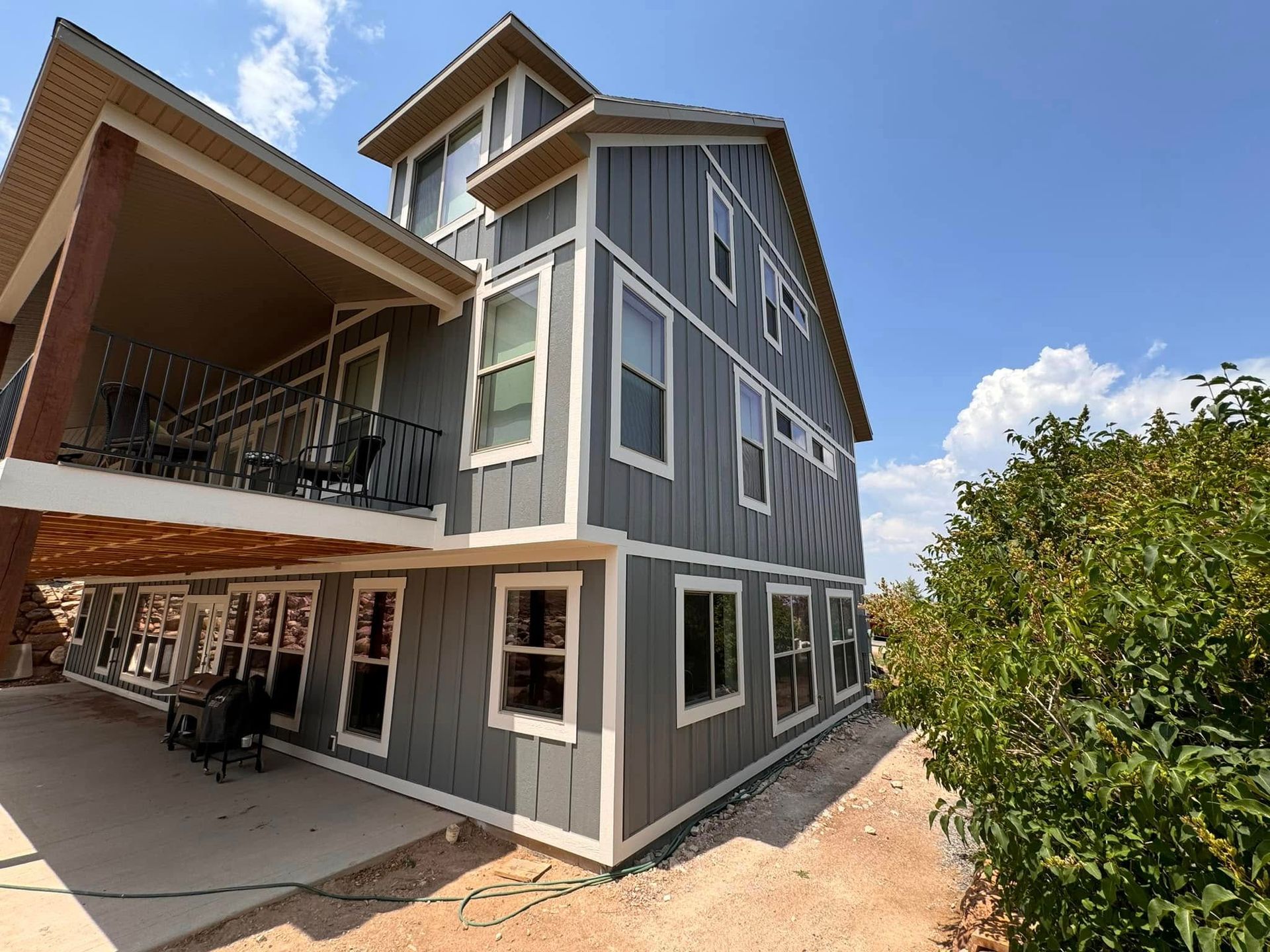
Why Source Repair Comes Before Surface Repair
Siding Master inspects trim, soffit, flashing, and siding together because a stain on one surface usually points to a failure in the component above or behind it, and patching the visible damage without fixing the entry point just moves the problem to the next storm. The crew documents where water is entering, what path it is following behind the cladding, and which components need to be removed or reset to close the opening, then completes those repairs before installing new trim or siding panels.
Once the exterior work is complete, the envelope no longer shows gaps at corners or joints, trim sits tight against the wall, and siding remains dry after rain because the flashing and seal now direct water away from the structure. Staining stops spreading, soft spots in the trim or sheathing are cut out and replaced with sound material, and the finished surfaces are uniform in color and alignment.
Exterior service includes evaluation of the entire envelope, repair of failed flashing and backing, and
replacement of damaged siding, trim, and soffit, but does not include foundation repair,
roof replacement, or interior wall patching. The written estimate details what will be removed, what will be repaired in place, and what will be replaced with new material.
Answers About How the Work Is Done
These questions come from homeowners in Logan and Providence who are dealing with multiple exterior problems and want to understand how the repairs will be approached.
How do you decide which exterior problem to fix first when several areas are damaged?
The crew traces the water path from the highest entry point down through the wall assembly, then repairs the source of the leak before addressing the damage it caused below, because fixing the visible stain without stopping the water just brings the damage back.
What happens if the trim backing is rotted when the old trim is removed?
The rotted backing is cut out, new solid wood or composite backing is fastened to the wall framing, and the new trim is installed over the sound surface so it stays tight and sealed against the siding.
Why do multiple exterior failures tend to show up together on older homes in Cache Valley?
Homes built with wood framing and minimal flashing in the mid-century often have trim, soffit, and siding that were installed as a continuous system, so once water breaches one joint it travels behind several components before the damage becomes visible on the surface.
What does a full exterior evaluation include on a typical site visit in Smithfield?
The crew walks the perimeter, inspects siding and trim at corners and openings, checks soffit and fascia for gaps or rot, examines flashing at roof and wall intersections, and documents where water is entering or where components have separated, then explains the findings and the recommended repair sequence.
What changes after exterior repairs are completed?
The envelope sheds water without allowing it behind the cladding, trim and soffit sit flush and sealed against adjoining surfaces, staining no longer spreads after storms, and the exterior surfaces are uniform in color and alignment with no visible gaps or soft spots.
Siding Master also handles exterior services in Preston, Logan, Hyde Park, North Logan, and Fish Haven. Schedule a site visit to have the entire exterior walked and the connected failures documented in a written estimate.