
Repairs That Stop the Damage at the Source
Siding repair in Smithfield for homes where staining or rot keeps returning because the flashing or seal behind the panel has failed
A single stained or rotting board on a wood-framed house often signals a flashing failure or broken seal behind the siding, where water has been entering the wall assembly and sitting against the sheathing long enough to darken or soften the wood. Siding Master repairs damaged siding across Cache Valley, tracing the damage back to the failed seal, flashing, or trim detail that let the water in before replacing the visible panel. The crew's thirty years of combined experience means they check the surrounding area and the layers behind the board, not just the surface that shows the stain.
Repair work begins with an inspection of the damaged panel and the flashing, caulk, and trim details around it, identifying where the water entered and what allowed it to reach the sheathing. The failed component is fixed or replaced first, then the damaged siding is removed, any soft sheathing is cut back and patched, and new panels are installed and matched to the surrounding wall as closely as possible.
Arrange an inspection to identify what caused the siding damage and what needs to be repaired to stop it from recurring.
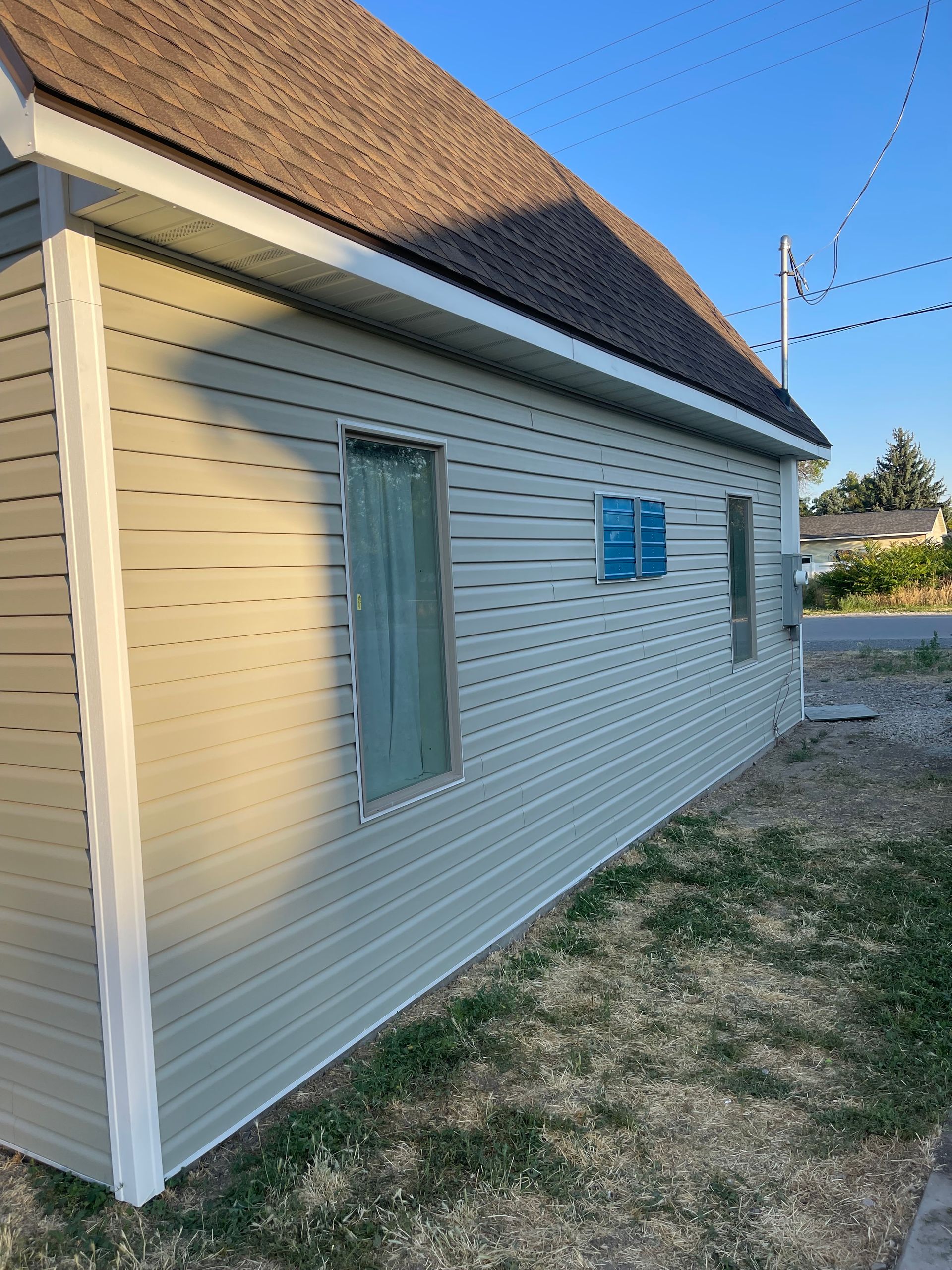
How the Repair Addresses the Underlying Failure
Siding Master inspects the area around the damage to find where the seal broke or the flashing pulled away, because replacing the board without fixing the entry point just hides the problem until the next storm pushes water back into the same gap. Once the source is located, the crew repairs or replaces the flashing, reseals joints, or adjusts trim to close the opening, then removes the damaged panel and checks the sheathing underneath for rot.
After the repair is complete, the wall no longer shows staining, the replaced panel sits flush with the surrounding siding, and water runs off the surface instead of pooling at corners or seeping behind edges. The sheathing stays dry because the barrier now directs moisture away from the wall assembly, and the color of the new panel is matched as closely as current stock allows.
The repair includes finding and fixing the failed flashing or seal, replacing the damaged siding, and patching any compromised sheathing, but does not include repainting the entire wall or replacing trim that is still sound. The written estimate spells out what will be removed, what will be repaired, and what stays in place.
What Property Owners Ask About the Work
Homeowners in Preston, Hyde Park, and surrounding areas ask these questions when they are dealing with recurring siding damage and want to understand what the repair involves.
Why does the same board keep rotting even after it has been replaced?
If the flashing or seal that failed is not repaired, water continues to enter the wall assembly at the same point and saturates the sheathing behind the new board, causing the damage to reappear within a season or two.
How do you find the source of the water damage when only one small area of siding is stained?
The crew inspects the flashing above and around the stain, checks caulk joints at windows and trim, and looks for gaps where panels meet corners or edges, because water travels downward and sideways behind the siding before it darkens the visible surface.
What gets replaced during a siding repair in older homes in Cache Valley?
The damaged panel is removed, any soft or rotted sheathing underneath is cut back and replaced, the failed flashing or seal is repaired, and new siding is installed and matched to the existing wall, with the replacement area blending into the surrounding surface as closely as material availability allows.
How closely can the new panel be matched to the old siding?
Matching depends on the age and manufacturer of the existing siding, but the crew sources the closest available color and profile, and in some cases the replacement panel weathers to match the surrounding wall within a year of exposure.
What should you check after the repair is finished to make sure the problem is solved?
The repaired area should sit flush with the surrounding siding, show no gaps at the seams, and remain dry during and after rain, with no new staining or soft spots appearing over the following months.
Siding Master also
repairs siding in Preston, Logan, Hyde Park, North Logan, and Fish Haven. Schedule an inspection to have the damaged area and the surrounding flashing evaluated before the repair starts.